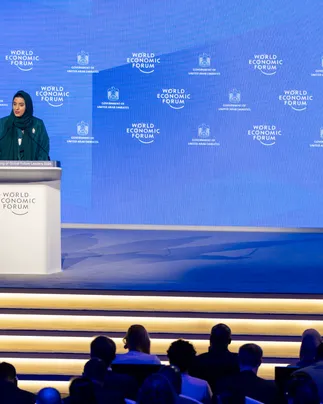


Convened by Sheikha Shamma bint Sultan bin Khalifa Al Nahyan, CEO of Frontier25, Frontier25 and the Global Methane Hub held a high-level policy dialogue on methane mitigation in Abu Dhabi, bringing together senior government, regulatory and industry leaders to discuss emerging findings and recommendations from their collaborative research project.
Sheikha Shamma bint Sultan bin Khalifa Al Nahyan, President and CEO of Frontier25, said: “There are few things that we take for granted more than the air that we breathe. But this invisible resource is a delicate equation – one that sets Earth apart from other planets. It is thanks to the uniquely perfect movements, pressures, and balances of oxygen, carbon, and nitrogen in our air and wider atmosphere that life as we know it is able to continue.
“We know now that human intervention and increasing industrialisation over the last two centuries have been gradually warming our atmosphere, upsetting these balances, and breaching our planetary boundaries. We are continuously learning of the damage that is causing to our climate, our environment, and human health.”
Methane mitigation has many climate and economic benefits that are well established, but its contribution to improving air quality and public health has received comparatively less attention. Through international benchmarking, analysis of the UAE policy landscape, and extensive stakeholder engagement, Frontier25 has developed a series of practical policy recommendations to help strengthen methane action across key sectors. The high-level dialogue provided an opportunity to discuss these emerging findings with senior decision-makers ahead of final publication.
Methane is responsible for approximately 30% of global warming since the Industrial Revolution and has a global warming potential of roughly 80 times that of carbon dioxide over a 20-year period. Rapid reductions in methane emissions during this decade could help avoid nearly 0.3°C of global warming by the 2040s, with significant co-benefits for public health and food security, including the prevention of 26 million tons of crop losses, 255,000 premature deaths, and 775,000 asthma-related hospitalisations.
The majority of human-driven methane emissions originate from fossil fuels, agriculture, and waste.
Frontier25 will publish a final report, incorporating insights from the discussion, in the third quarter of 2026.