
The Abu Dhabi Department of Energy has hosted the third edition of the Water and Energy Majlis under the theme From National Readiness to Smart Resilience. The Majlis is a flagship Abu Dhabi Department of Energy initiative that supports sustainable and impactful growth across the water and energy sectors. The 2026 edition was held under the umbrella of Abu Dhabi Water & Power Week, scheduled for the final quarter of the year.
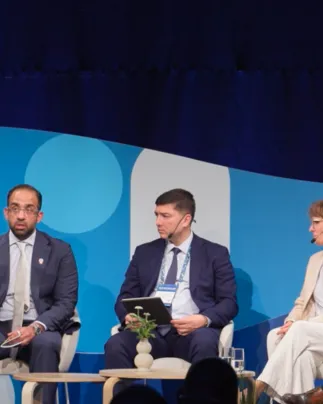
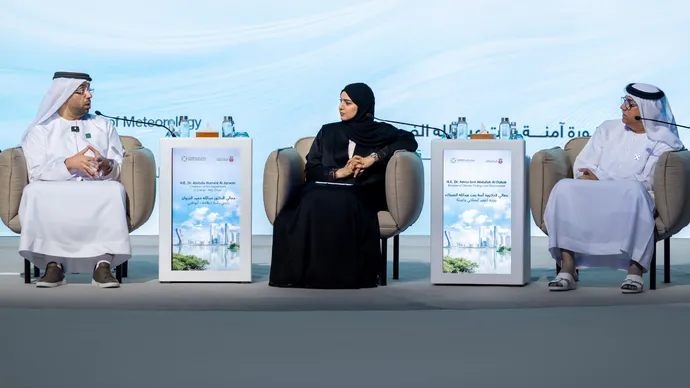
The event also marked the official launch of the Abu Dhabi Water and Energy Resilience Framework, developed by the Abu Dhabi Department of Energy. The newly introduced framework was the focus of a high-level discussion between Her Excellency Dr Amna bint Abdullah Al Dahak, UAE Minister of Climate Change and Environment, and His Excellency Dr Abdulla Ahmed Al Mandous, President of the World Meteorological Organization and Director General of the National Center of Meteorology. The discussion was moderated by His Excellency Dr Abdulla Humaid Al Jarwan, Chairman of the Abu Dhabi Department of Energy.
Through this high-level session, Abu Dhabi Department of Energy convened national leaders, policymakers, and key industry stakeholders to share insights and experiences that can help strengthen the new framework and support its strategic objectives.
The framework is structured around three core pillars: infrastructure; human capital and governance; and technology and innovation. It sets out 15 strategic measures to strengthen the resilience, reliability, and efficiency of the national water and energy system. The measures encompass supply security, emergency preparedness, capacity planning, diversification of energy and water resources, integrated sector management, and support for the system through centralised assets that can be deployed, transferred, and distributed in line with demand.
The Majlis, which forms part of the Our Foundation is Strong campaign launched by the department in 2026, was attended by ministers and senior officials from more than thirty countries, alongside representatives of public and private entities operating in the water and energy sectors. Discussions focused on regional developments, as well as national efforts to strengthen the resilience of water and energy systems. Participants also explored opportunities to enhance strategic coordination at the local and regional levels, advance emergency preparedness, leverage digital and emerging technologies in crisis response, and build on the UAE’s experience to develop a shared framework and roadmap for strengthening water and energy resilience across the region.
In his opening remarks, His Excellency Dr Abdulla Humaid Al Jarwan, Chairman of the Abu Dhabi Department of Energy, underscored the importance of strengthening cooperation among national and regional entities, and highlighted the need to establish a shared regulatory foundation built on smart resilience and system integration. He also pointed to the opportunities presented by connecting national systems within a unified regional framework capable of enhancing the security of shared resources, safeguarding transmission and distribution networks, and ensuring the efficient, resilient, and responsible delivery of services.
His Excellency Al Jarwan said: “The water and energy sectors are vital pillars of the national security system, and safeguarding them is the responsibility of every official and decision-maker. What we have witnessed recently has been a practical demonstration of the efficiency and resilience of our infrastructure and a test of our ability to protect our national resources. The efforts we are advancing today reflect Abu Dhabi’s ambitions and the vision of its wise leadership to ensure the prosperity of our communities, protect the future of our children, enable economic growth, and safeguard the stability of our nations.
“Today, we stand at a pivotal moment for the water and energy sectors. We have come together to help shape their future by strengthening partnerships, aligning efforts, and expanding cooperation at both the national and regional levels. More than ever, we must work towards shared goals, guided by a common vision and clear priorities, to safeguard our collective resources and build a resilient, interconnected framework that strengthens systems, supports collaboration, and enhances our ability to respond effectively to any crisis.”
Participants also highlighted the importance of coordinated and strategic collaboration among stakeholders to ensure the highest levels of security and sustainability for national water and energy resources.
Her Excellency Dr Amna bint Abdullah Al Dahak, UAE Minister of Climate Change and Environment, said: “In the UAE, we view water, energy, and food security as an interconnected resilience system. Our national strategies integrate these sectors into a single developmental pathway, aligned with our ambitious target to achieve net-zero emissions by 2050. Within this framework, we are enhancing local food production by deploying climate-smart agricultural technologies that maximise water and energy efficiency while minimising our carbon footprint. We are equally committed to transforming the entire food value chain to be more efficient and sustainable.
“To secure our water future, we are pursuing the ambitious goals of the UAE Water Security Strategy 2036. This includes optimising water and energy demand through sustainable desalination, particularly through the widespread adoption of advanced reverse osmosis systems. On the global stage, the UAE is fostering international cooperation to address water scarcity, as demonstrated by the launch of the Mohamed bin Zayed Water Initiative (MBZI). This December we will convene global players to the UN Water Conference in Abu Dhabi, which we are hosting in partnership with Senegal. We aim to transform global water challenges into collaborative opportunities, treating water as a shared global resource.
“Our resilience model extends beyond infrastructure; its strategic core is rooted in the community. Empowering individuals as active partners is essential to fostering a conscious, responsible approach to environmental challenges. In parallel, we are accelerating our transition towards a circular economy driven by innovation. By powering water production with clean energy, optimising its use in agriculture, and scaling up water recycling, we are building a sustainable development model that protects our environment, strengthens national resilience, and ensures prosperity for generations to come.”
His Excellency Dr Abdulla Ahmed Al Mandous, President of the World Meteorological Organization and the Director General of the National Center of Meteorology, emphasised that water and energy security for any nation depend entirely on its ability to monitor the atmosphere with precision and clarity. His Excellency noted that the UAE has developed an advanced meteorological observation and early warning system under the wise guidance of the UAE leadership, headed by His Highness Sheikh Mohamed bin Zayed Al Nahyan, President of the UAE. Through global data sharing and the regional integration of radar networks, the UAE has made a significant contribution to protecting critical infrastructure from extreme weather events.
His Excellency further highlighted the UAE’s support for cooperation between the World Meteorological Organization and the International Renewable Energy Agency, as well as its contribution to the global coordination of water-related data. These efforts help integrate climate risks into water and energy policies and strengthen crisis response capabilities.
In the field of technology and innovation, the National Center of Meteorology has integrated artificial intelligence technologies into weather forecasting, while the UAE has developed cloud seeding technologies to enhance its water resources. Looking ahead, opportunities lie in expanding observation, seismic monitoring, and early warning networks; strengthening regional data sharing and training; and promoting the exchange of technology and expertise through the UAE Research Program for Rain Enhancement Science. These initiatives support the sustainability of water and energy resources and contribute to enhancing climate security at both the regional and global levels.
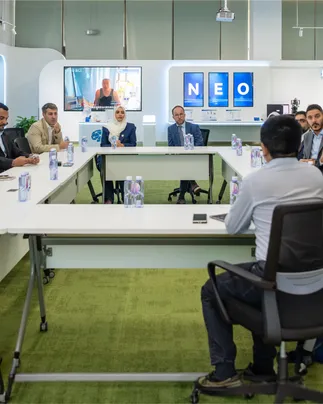
Through its various sessions and meetings, the Majlis explored the shared responsibilities of sector leaders, regional crisis preparedness, regulatory standards and policies, and the role of technology and artificial intelligence during emergencies. Discussions underscored the importance of strengthening communication and dialogue, while establishing specialised task forces to lead coordinated local and regional efforts aimed at enhancing operational resilience, supply security, efficiency, and service reliability.