
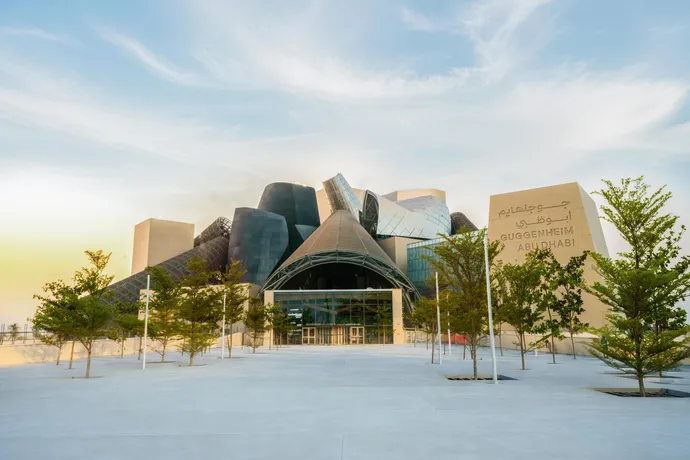
The Department of Culture and Tourism – Abu Dhabi (DCT Abu Dhabi) has shared the architectural vision behind Guggenheim Abu Dhabi, a landmark cultural institution located within Saadiyat Cultural District and designed by the late Pritzker Prize-winning architect Frank Gehry.
Conceived as a museum that responds directly to its environment, Guggenheim Abu Dhabi is deeply rooted in Abu Dhabi's landscape, climate and cultural vision. From the earliest stages of design development, Gehry and his team undertook extensive site visits and research to understand how people gather, move and experience the emirate. The result is a site-specific architectural landmark shaped by local context, environmental responsiveness and cultural exchange.
The museum's design extends beyond traditional gallery walls, integrating shaded courtyards, terraced outdoor spaces and areas for gathering that encourage visitors to engage with both the art and their surroundings. Inspired by the distinct qualities of Abu Dhabi, the architecture creates a seamless connection between indoor and outdoor experience.
From the outset, the design was shaped by an artist-centred vision. Through a series of physical models and design studies, Gehry Partners explored not only the form of the building but how architecture could expand creative possibilities for artists and enrich the visitor experience. The resulting museum offers a dynamic journey through interconnected galleries, exhibition spaces and outdoor installations, creating opportunities for discovery, reflection and engagement with art at every turn.
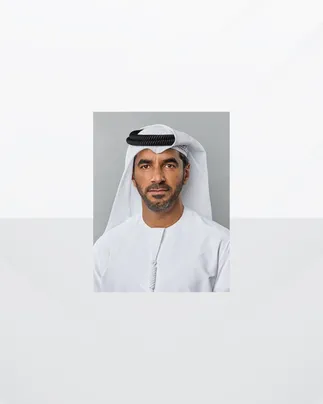
His Excellency Mohamed Khalifa Al Mubarak, Chairman of DCT Abu Dhabi, said:“Abu Dhabi has always understood that culture shapes who we are and how we connect with the world. Every institution within Saadiyat Cultural District reflects that conviction; rooted in this place and open to the world. From the very beginning, Frank Gehry understood that this building had to be inspired by the emirate, being shaped by Abu Dhabi’s light, its climate, its coastline and its traditions. What he has given us is a museum that draws from its surroundings, a building that carries the forms of this region into something entirely new. Guggenheim Abu Dhabi is a work of art in its own right. It will stand as one of the great works of architecture of our time, and as a space where artists and audiences from the United Arab Emirates, the region, and the world can come together in ways that only this museum makes possible.”
Meaghan Lloyd, Partner at Gehry Partners, said: “Guggenheim Abu Dhabi is an expression of Frank Gehry’s love for Abu Dhabi and his deep respect for its vision, courage, and patience. From the first, he was inspired by the scale of the Saadiyat Island Cultural District and by Abu Dhabi’s strategic investment in culture as a way to drive progress and shape the future of the country. Frank was always mindful of the faith Abu Dhabi’s leaders had placed in him, and of the responsibility that came with a project of this importance. He approached the design carefully, searching for an architectural language that respected both Abu Dhabi’s history and its aspirations. The result is a building of great scale, but one that never loses sight of the individual: the visitor, the artist, and the work of art. As always with Frank, the mission was ambitious, generous, and optimistic. All of us at Gehry Partners are honoured and humbled to carry this project to completion in his name.”
At the heart of the project is an ambition to create exceptional possibilities for artists and audiences alike. Guggenheim Abu Dhabi encompasses 28 galleries, 11,600 square metres of interior gallery space and 23,000 square metres of outdoor exhibition space within a total building area of 84,000 square metres. Its expansive galleries, varied spatial configurations and integrated outdoor environments provide artists with the opportunity to realise ambitious commissions and exhibitions across a wide range of media and scales.
One of the museum’s most distinctive architectural features is its cluster of monumental cones, nine clad in stainless steel mesh, and one in onyx and glass. These sculptural forms respond directly to Abu Dhabi's climate by creating shaded public spaces and facilitating airflow across courtyards and terraces. Drawing warm air upwards while directing cooling breezes below, the cones contribute to a more comfortable microclimate.
The museum's setting on Saadiyat Island, surrounded by water and positioned at the meeting point of land and sea, also played a central role in the design. Its relationship to the coastline informed the building's orientation, movement patterns and public spaces, reinforcing a sense of openness and connection between the museum, its environment and the wider Saadiyat Cultural District.
As part of Guggenheim Abu Dhabi’s inaugural programming, the museum’s exhibition dedicated to Frank Gehry will offer an unprecedented look at the creative journey behind one of the region's most significant cultural landmarks. Through years of original sketches, hand-built early models, and archival materials, the exhibition will reveal the evolution of Gehry's vision evolved in response to Abu Dhabi's landscape, culture, and artistic ambitions, culminating in Guggenheim Abu Dhabi, a museum designed specifically for its setting.
As Guggenheim Abu Dhabi prepares to open on 11 December 2026, the museum enters its final phase of delivery. It will serve as a platform for artistic exchange, research and cultural dialogue, welcoming artists and audiences from the United Arab Emirates, the region and around the world, while contributing to Abu Dhabi's growing role as a global cultural capital.
Tickets are now available at www.guggenheimabudhabi.ae for visitors looking to be among the first to experience Guggenheim Abu Dhabi's galleries, exhibitions and public spaces when the museum opens.