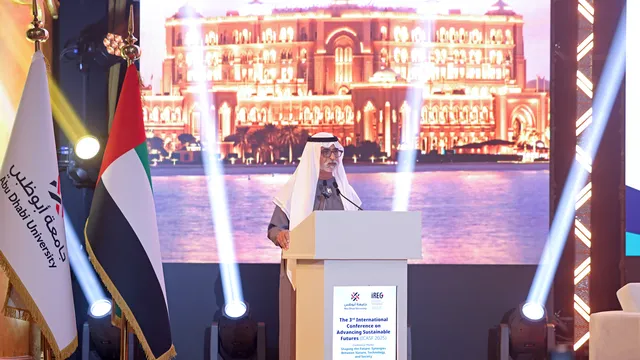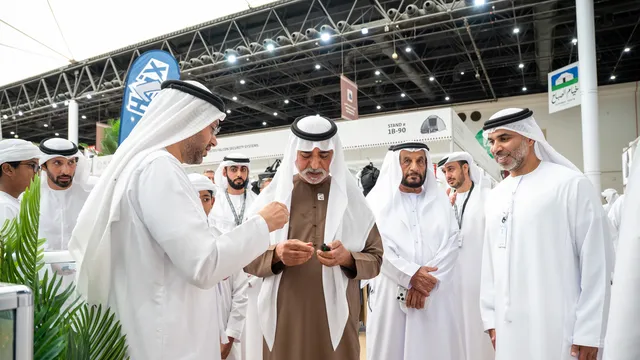

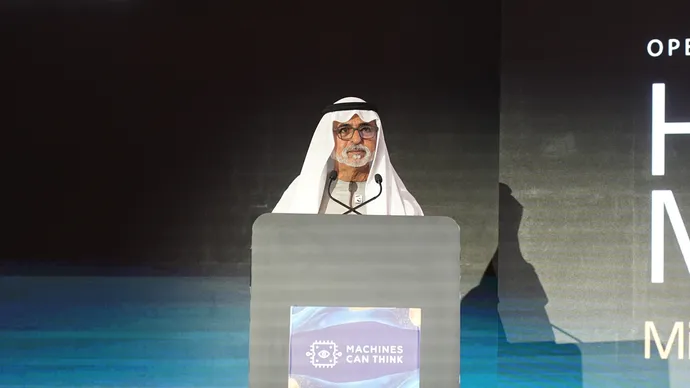
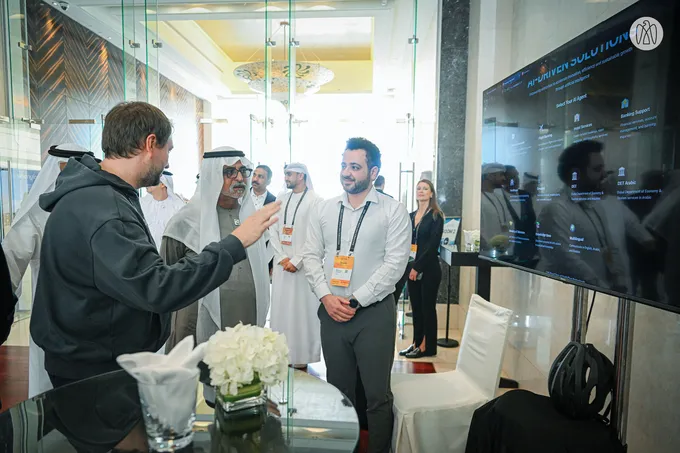
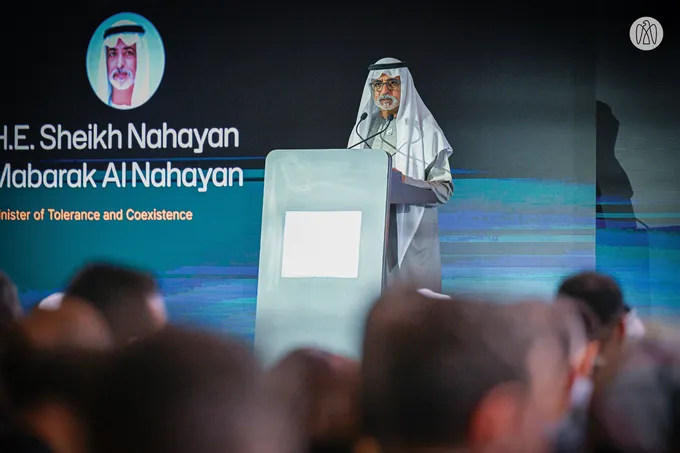
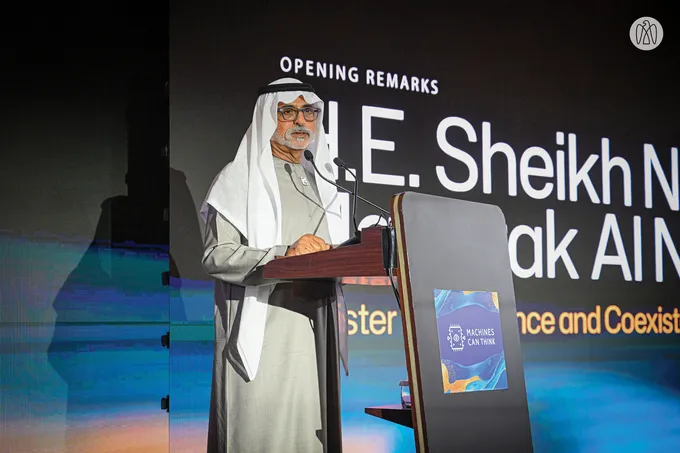
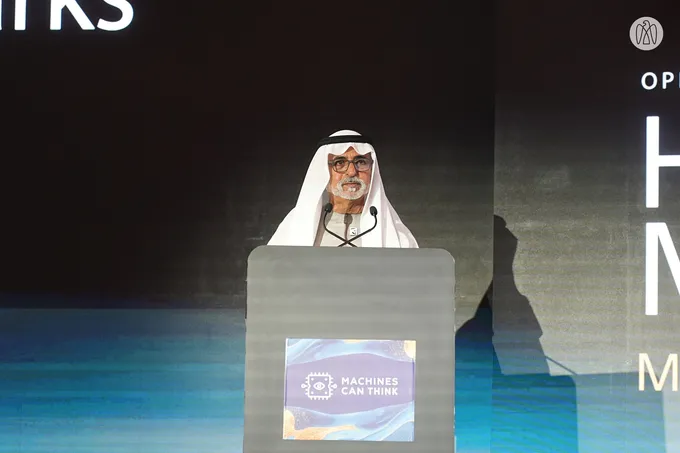
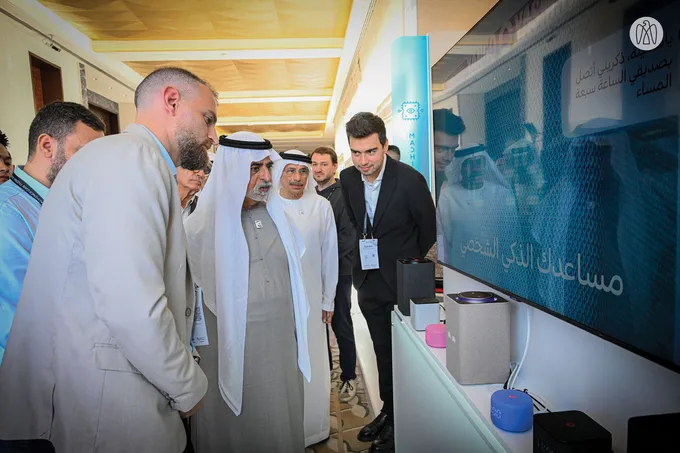
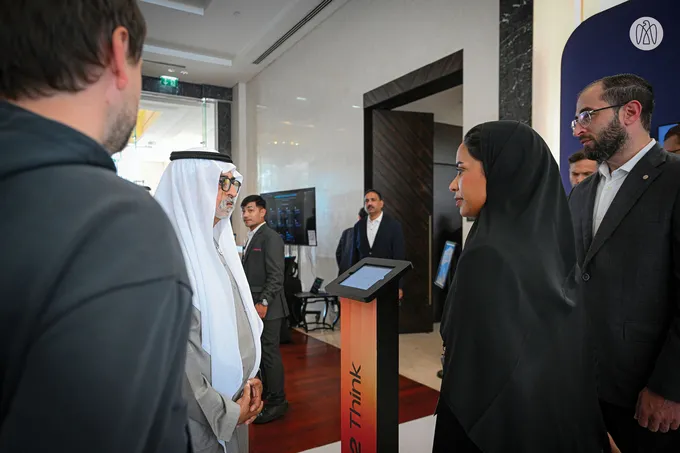
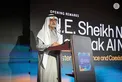
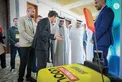
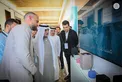
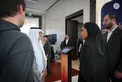
His Excellency Sheikh Nahyan bin Mubarak Al Nahyan, Minister of Tolerance and Coexistence, inaugurated the Machines Can Think 2026 summit, the UAE’s flagship artificial intelligence (AI) adoption event, held from 26 to 27 January 2026 at Park Hyatt Saadiyat in Abu Dhabi. The summit was co-organised and co-hosted by Polynome Group and the Mohamed bin Zayed University of Artificial Intelligence (MBZUAI).
The summit brought together a distinguished group of policymakers, scientists, researchers, technologists, industry leaders, entrepreneurs, and AI experts from around the world, providing an international platform to examine how AI systems can transition from ambition and experimentation to national-scale impact through real-world applications. Discussions throughout the summit reinforced the UAE’s growing role as a global hub for the responsible development and deployment of AI.
The Industrial Day built on the momentum of the opening programme, convening decision-makers, technologists, researchers, and industry leaders to explore operational AI, leadership readiness, sector-wide transformation, and mechanisms for scaling AI adoption at the national level, while linking technological innovation with economic and developmental opportunities.
In his keynote address at the opening of the summit, His Excellency highlighted that he was pleased to join participants at the inauguration of the Machines Can Think 2026 and to welcome to the UAE a distinguished gathering of global leaders in deep technology, policymaking, and AI from academia, industry, and government. He noted that the world is living through an extraordinary moment in human history, in which technology is no longer limited to tools for calculation, but has become systems that learn, adapt, and increasingly think alongside humans, helping them understand the world, make decisions, and create new realities.
He added that the central question facing the summit is no longer whether machines can think, as this is already evident in today’s innovations, but rather the deeper and more urgent question of how humans will choose to think, act, and lead in the age of intelligent machines. If machines can think, he said, society must ask about the purpose of that thinking: whether it should focus solely on speed and efficiency, or whether truly intelligent systems must be guided to engage with the complexities of the human condition and help move the world toward what humanity aspires to become, rather than merely reflecting reality with all its flaws.
His Excellency explained that this is the challenge the UAE is prepared to meet under the wise and enlightened leadership of His Highness Sheikh Mohamed bin Zayed Al Nahyan, President of the UAE. He stressed that the country’s approach is grounded in the firm belief that technological advancement and human values are not in conflict, and that embedding ethics in innovation does not slow progress but rather guides it to serve humanity. He added that the President leads the nation with the conviction that progress must serve people, not the other way around, and that the true measure of a nation’s advancement lies not in the sophistication of its machines, but in the dignity and well-being of its people.
He further affirmed that the UAE invests in AI because it believes in science, education, and the future, while also investing in tolerance, coexistence, and human fraternity. He emphasised the country’s commitment to ensuring that technology serves all people without exception, respects cultural diversity, protects human dignity, and strengthens social cohesion, noting that without these human values, no technology can truly succeed.
Addressing the participants, His Excellency noted that the difference between AI that fragments societies and AI that unites them lies not in algorithms, but in the intentions of those who design, govern, and use these technologies. He pointed out that the defining question in 2026 is no longer “What can we build?” but “What should we build, and why?”—a question that requires a new model of leadership based on collaboration between engineers, ethicists, policymakers, and entrepreneurs, and a comprehensive understanding of AI governance as a matter of culture, values, and shared responsibility, not merely regulation.
He also highlighted that AI is inherently global in nature, with risks, benefits, and impacts that transcend borders, making international cooperation essential to shaping its future through shared standards, shared learning, and collective responsibility.
His Excellency concluded his address by emphasising that scientists, engineers, and entrepreneurs are not merely builders of technology, but stewards of the future. Their choices, assumptions, and values, he said, will shape the trajectory of AI. Excellence in AI, he stressed, is no longer measured by performance alone, but by purpose. While machines may learn, reason, and assist, only humans can exercise judgment, and the future of AI will be determined not by thinking machines, but by humans who care. He wished the summit every success.
The summit’s Industrial Day featured a series of specialised keynote sessions, including The Next AI Datacentre: Accelerated, Energy-Aware, Everywhere, by Marc Hamilton of NVIDIA; Going Beyond Human-Level Perception, by Manohar Paluri, Vice President of AI at Meta; Generative AI and Magical Thinking, by Serge Belongie, Director of the Pioneer Centre for AI at the University of Copenhagen; and Is AI Imperative? by Dr Ahmed Sulaiman Al Dhaheri, Director of the AI Centre at Abu Dhabi Police.
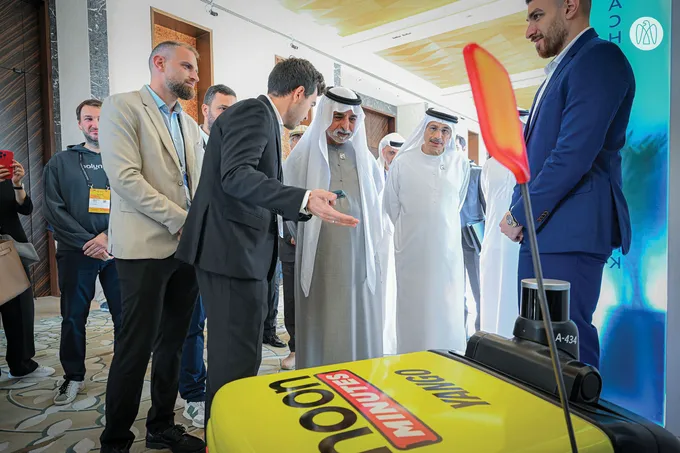
The programme also addressed AI applications across key sectors, including telecommunications, autonomous delivery, speech technologies, and education, in addition to hosting a Startup Competition Day, which provided entrepreneurs with a platform to present their innovations to an expert jury and connect with investors, industry leaders, and potential partners within the broader Machines Can ecosystem.
The Machines Can Think 2026 was supported by a growing ecosystem of partners, including the MBZUAI, the Abu Dhabi Convention and Exhibition Bureau, Yango Group, Mubadala, NVIDIA, Abu Dhabi Police, DDN, e&, Tahaluf, Aiphoria, Backwell Tech, Women in AI (global network and UAE chapter), Sandooq Al Watan, XPANCEO, MBuzz, Beco Capital, Hub71, Orbit, Jupiter E-Power, and VAST Data.
The Machines Can series will continue with the Machines Can See 2026 summit in April 2026, which will focus on machine perception, vision systems, and their real-world applications across industry and public services, further reinforcing the UAE’s leadership role in shaping the global future of responsible AI.