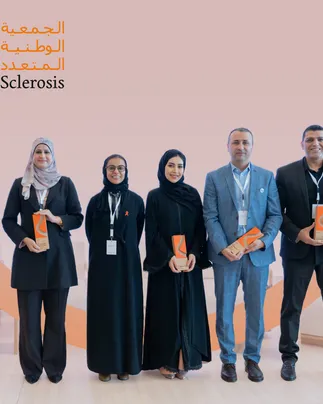

The National Multiple Sclerosis Society (NMSS) has named the winners of Cycle Two of its Universal Design for Inclusion Program (UDIP), recognising student-led solutions developed to address challenges across three key areas: mobility, cognitive, and communication accessibility.
From helping people find accessible routes in real time to offering insights into day-to-day functioning and easing everyday communication, the winning projects, Mashi, Konstant, and Empathic Communication Helper for Others (ECHO), demonstrate how young innovators are rethinking accessibility through practical, human-centered design.
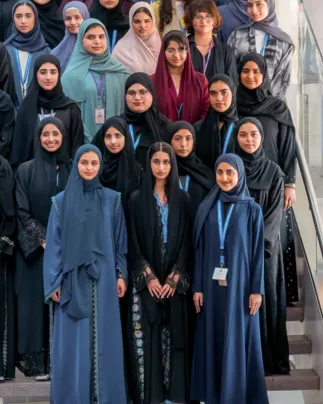
The programme serves as the society’s flagship youth awareness initiative, running across six universities in the UAE over 12 campuses. Building on the success of the inaugural cycle, the second cycle of the programme engaged over 450 students, with more than 100 students submitting a total of 51 projects addressing real-world challenges faced by People of Determination (PoD).
Through a series of workshops and mentorship sessions, participants explored how universal design can be applied in practical ways, with a strong emphasis on understanding user needs and lived experiences.
The programme encouraged students to move beyond conventional design approaches by placing accessibility at the center of the design process, demonstrating how thoughtful design decisions can directly enhance usability and independence.
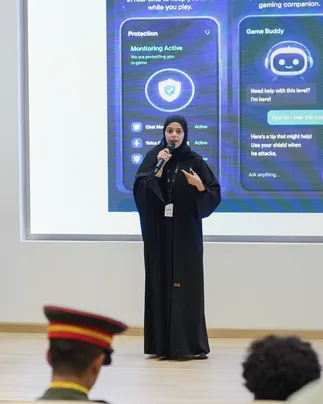
In the Mobility category, the winning project, Mashi, developed at the Higher Colleges of Technology in Sharjah, was presented a smart navigation application designed to make movement more predictable and accessible. It enables users to identify suitable routes, locate facilities such as ramps and elevators, and access real-time information on accessibility conditions.
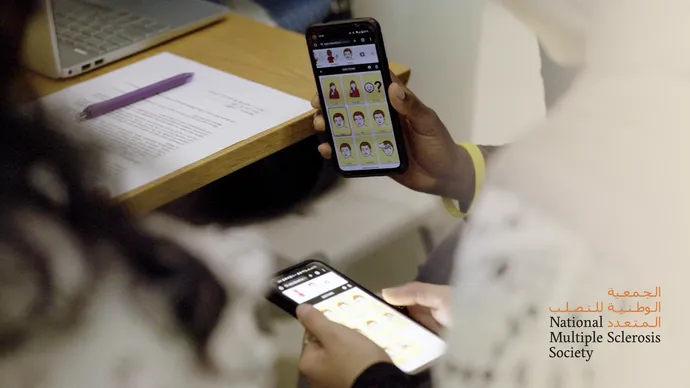
The Cognitive category winner, Konstant, created by a team of students from NYU Abu Dhabi, is a mobile application that passively tracks patterns in daily activity, including movement, sleep quality, and phone usage. By identifying changes over time, it helps build a clearer picture of day-to-day functioning for people living with multiple sclerosis and similar conditions,
In the Communication category, ECHO, developed by a student at NYU Abu Dhabi, addresses a common gap in communication tools by focusing on the person on the other side of the conversation. It offers simple, real-time guidance on how to listen, respond, and interact more effectively, helping reduce misunderstandings and improve everyday communication.
Maral Alexandrian, Acting Executive Director at the National Multiple Sclerosis Society, said: “Initiatives like UDIP reflect the growing importance of inclusive thinking in how we design and innovate. As expectations around accessibility continue to evolve, it is critical that we equip the next generation with the mindset and awareness needed to contribute to more inclusive communities, ensuring that People with MS, and all People of Determination, are able to navigate the world with greater ease and independence, while creating environments that are more accessible and beneficial for all.
“We are encouraged by the level of engagement from universities and students across the UAE, and by the growing interest in applying their skills to address real-world challenges faced by People of Determination. Together with our partners, we are seeing how this collective effort is delivering impactful programs that deepen understanding of diverse needs and lead to more thoughtful, inclusive outcomes.”
The second cycle of UDIP was delivered in collaboration with Authority of Social Contribution – Ma’an as the program partner, with support from Technip Energies as award partner. Through this collaboration, each of the three winning teams was awarded AED6,000 in recognition of their work.
Participating universities included the Higher Colleges of Technology; New York University Abu Dhabi; Abu Dhabi University; Dubai Institute of Design and Innovation; University of Sharjah; and Al Ain University.