
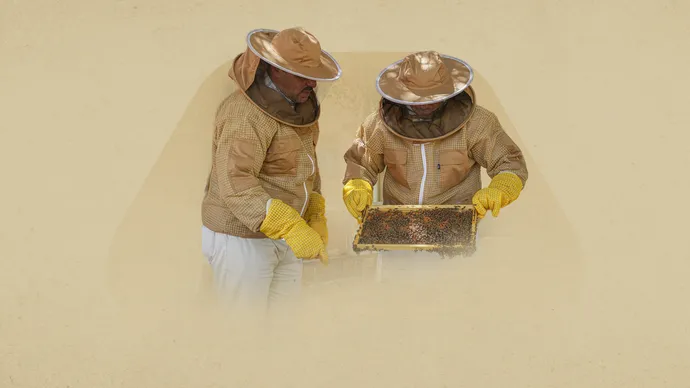
The Abu Dhabi Agriculture and Food Safety Authority (ADAFSA) has announced the commencement of production of the 11th generation of Emirati queen bees, as part of its integrated programme to advance the beekeeping and honey‑production sector and reduce reliance on imported bee packages. This initiative reflects the Authority’s commitment to supporting the sustainability of Abu Dhabi’s agricultural sector and strengthening the national food‑security ecosystem.
The announcement coincides with World Bee Day, observed annually on 20 May, which this year is held under the theme Bee together for people and the planet, a partnership that sustains us all. The theme highlights the essential role of bees and other pollinators in supporting agricultural production, preserving biodiversity and sustaining ecosystems.
ADAFSA confirmed that it has made significant progress in developing the Emirati honeybee strain, successfully producing 10 consecutive generations between 2015 and 2025. This achievement resulted in the production of approximately 25,000 queen bees, of which around 19,000 were distributed to 613 beekeepers across the UAE. In March 2026, the authority commenced production of the 11th generation, rearing approximately 1,500 queen bees to date and distributing 850 queens to 23 beekeepers. Production is ongoing, with a target of 2,000 queens during the spring season (March–May 2026) and 3,300 queens during the autumn season (October–November 2026), bringing the total planned output to 5,300 Emirati queen bees during 2026.
Through the provision of high‑performance local queen bees, ADAFSA continues to support beekeepers and strengthen the sustainability of the beekeeping and honey‑production sector, while enhancing the quality of local honey—particularly premium varieties associated with the UAE’s natural environments, including Samar, Sidr, Ghaf, Mangrove (Qurm), Harmal and wild‑flower honey. In parallel, the authority is working to raise community awareness of the importance of bees and their vital role in ecological balance and food security, contributing to the improved quality and competitiveness of Emirati honey in regional and global markets.
As part of its efforts to enhance the quality and competitiveness of local honey, ADAFSA is developing the Abu Dhabi Honey initiative. The initiative aims to elevate bee products produced within the emirate by supporting beekeepers with high‑efficiency local strains and implementing stringent standards to ensure the quality of honey produced across diverse natural environments. The initiative aligns with the authority’s objective of increasing the economic value of Emirati honey, expanding market opportunities for beekeepers, and developing a sustainable production ecosystem that reflects Abu Dhabi’s rich environmental diversity, including Sidr, Samar, Ghaf and Mangrove environments, alongside other native plant species that give Emirati honey its distinctive flavour and unique properties.
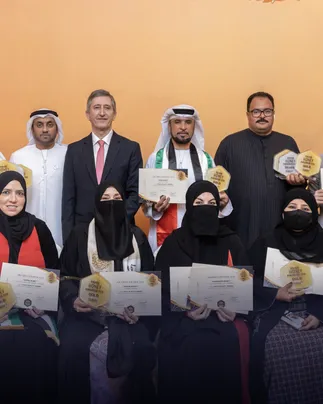
As part of these efforts, the authority organised the Al Wathba Honey Festival from 5 to 14 December 2025, within the framework of the Sheikh Mansour bin Zayed Agricultural Excellence Award, held during the Sheikh Zayed Festival in Al Wathba, Abu Dhabi. The festival saw the participation of 42 beekeepers and specialised honey‑production companies and featured eight competitive categories, including a newly introduced competition for the best local pollen product. A total of 221 participants competed, with 40 winners awarded prizes amounting to AED622,000.
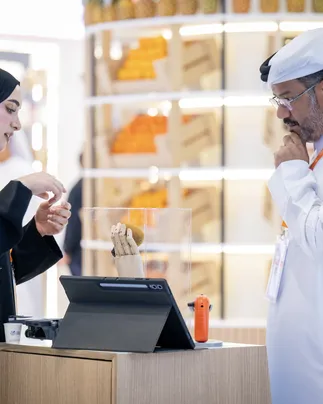
ADAFSA also participated in several national events aimed at promoting awareness of the value and status of Emirati honey, including the Al Ain Heritage Exhibition, the Emirates Agriculture Conference and Exhibition, and the Make it in the Emirates Forum. These platforms highlighted the diversity of honey produced across the UAE’s ecosystems—from the mountains of Al Ain and the deserts of Abu Dhabi to the mangrove coastlines—while educating beekeepers on the importance of value‑added hive products, such as honey vinegar and the recycling of natural beeswax into artistic and decorative items. These efforts also reflect the Authority’s environmental role in preventing the spread of wax moths, which cause significant losses to beekeepers, while underscoring the importance of queen bees in improving production quality. The initiatives further highlight the nutritional value and antioxidant properties of Emirati honey, as well as ADAFSA’s work in developing the local honeybee strain.
Internationally, the Authority achieved a notable milestone at the Paris International Honey Awards (PIHA) 2026, winning three prestigious awards: a Gold Award for Sidr honey, a Gold Award for Samar honey in the liquid honey category, and a Silver Award for crystallised Ghaf honey. In addition, 13 Emirati beekeepers participated with 29 samples of various honey types, securing two Platinum awards, 21 Gold awards and six Silver awards, further enhancing the global reputation of Emirati honey. The authority affirmed that these results reflect the remarkable progress achieved in the sector, driven by the support of the country’s wise leadership, the dedication of local producers and ADAFSA’s development programmes aligned with international best practices.
In collaboration with the Department of Municipalities and Transport (DMT), ADAFSA has launched an initiative to allocate regulated sites for beekeepers within government‑owned forests and natural areas, with the aim of protecting pollinators, enhancing biodiversity and developing the emirate’s honey sector. Under the initiative, outstanding beekeepers—selected from winners of the Sheikh Mansour bin Zayed Agricultural Excellence Award—are granted access to designated production sites governed by strict environmental controls, including a cap of 100 beehives per site to maintain ecological balance and prevent excessive pressure on natural nectar sources. ADAFSA oversees implementation through a weekly inspection programme covering apiary locations, honey‑extraction processes and sample collection. All products undergo rigorous laboratory testing to ensure compliance with pesticide and antibiotic residue limits, quality specifications and health standards.
To support capacity‑building, the Authority has delivered specialised workshops and scientific seminars on beekeeping and honey production, including guidance on competition requirements for the Al Wathba Honey Festival and discussions on the UAE’s hosting of the Apimondia Forum 2026 and the Apimondia Congress 2027.
It has also delivered a training course for beginners on the fundamentals of beekeeping, as well as another on good beekeeping practices during October 2025. It is currently preparing to organise a training course during May–June 2026 on apiary setup and beekeeping operations to produce Ghaf, Samar, and mangrove honey, as well as honeybee pests and diseases and methods of control. These efforts aim to train beekeepers in best practices to produce high-quality honey and maintain healthy, resilient honeybee colonies adapted to the conditions of the UAE.
ADAFSA affirms that protecting bees is a civilised behaviour and a shared societal responsibility that contributes to the sustainability of biodiversity and food security in the UAE, given the pivotal role bees play in agricultural pollination, food production sustainability and ecosystem balance. The authority stresses the importance of enhancing community awareness and uniting efforts to ensure a sustainable future for this vital sector.