
The Department of Culture and Tourism – Abu Dhabi (DCT Abu Dhabi) has launched the Emirati Dhiyafa (Hospitality) Standards, a practical and measurable framework that embeds Emirati hospitality and national identity in the visitor journey at hotels and hotel apartments across the emirate.
This strategic initiative contributes to the Emirati National Identity Strategy by reinforcing the UAE’s vision of a deeply rooted Emirati identity embraced with pride across society. The standards incorporate the pillars and values of the national identity, reflecting social cohesion, and existence, through the traditional Emirati code of conduct and etiquette of Al Sana’ and the authentic Emirati spirit of hospitality.
The initiative supports Abu Dhabi’s Tourism Strategy 2030 by creating more distinctive visitor experiences and reinforcing the emirate’s position as a leading global destination where authentic heritage is woven into every stage of the visitor experience.
His Excellency Saleh Mohamed Al Geziry, Director General for Tourism at DCT Abu Dhabi, said: “The experiences that visitors remember most are often the simplest: the warmth of a welcome, the sharing of local traditions, and the feeling of being genuinely looked after. The Emirati Dhiyafa Standards translate these timeless values into a framework that will enrich every stage of the visitor journey. By embedding our cultural identity within the hospitality experience, we are creating a more distinctive and meaningful connection between our visitors and Abu Dhabi, while strengthening the emirate’s tourism ecosystem and sustaining the momentum of our Tourism Strategy 2030.”
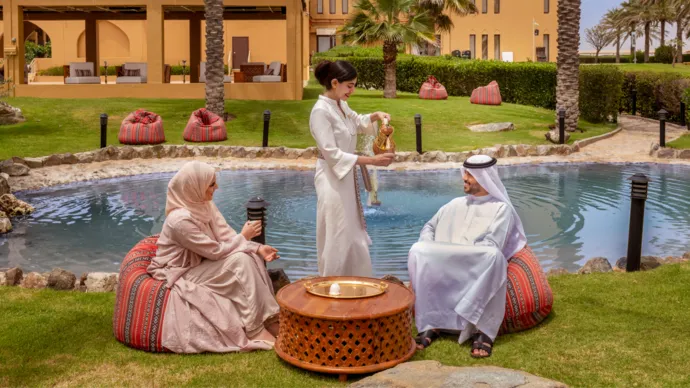
Developed in collaboration with the National Projects Office (NPO), with the support of the National Identity Committee under the Education, Human Development and Community Council, the framework comprises 65 practical standards spanning eight stages of the visitor journey, from pre-arrival communications through to departure. Guests will experience authentic expressions of Emirati hospitality, including a traditional welcome greeting of Marhaba AlSaa, offering Emirati coffee, and locally-sourced dates of a traditional Emirati variety, opportunities to discover Emirati dishes such as harees and balaleet. Together, the standards bring the values of Al Sana’, the Emirati code of etiquette, generosity and respect, into everyday visitor experiences.
Among the mandatory standards for hotels are: hotel websites include a section or links to information about the history and culture of the UAE; pre-arrival messages provide information on how to experience the unique culture, heritage, and natural setting of the UAE; the guest welcome area is at all times staffed with at least one employee dressed in traditional Emirati attire; guest facing and food & beverages staff can name and explain at least three traditional Emirati dishes and their role in Emirati dining traditions; and at least one guest facing public area incorporates at least one Emirati heritage-inspired design element.
A flexible compliance model will be tailored to different accommodation types. Hotels will implement a minimum of 20 standards, comprising 10 mandatory and 10 self-selected standards, while hotel apartments will adopt a minimum of 10 standards comprised of 5 mandatory and 5 self-selected standards from a streamlined framework. Participating properties will be supported through detailed implementation guidance, cultural training programmes, and an operational playbook, with full implementation across the emirate planned for Q1 2027. A future guest-facing Emirati Dhiyafa Mark will recognise establishments that exceed the baseline across three tiers of excellence.