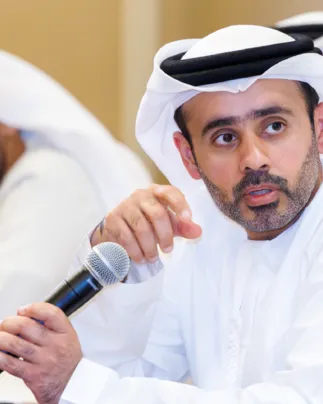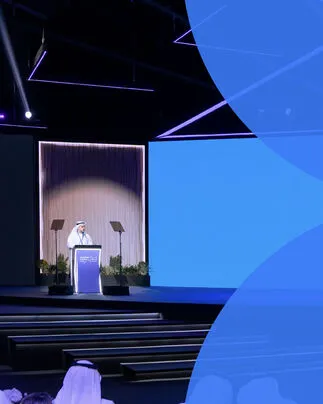

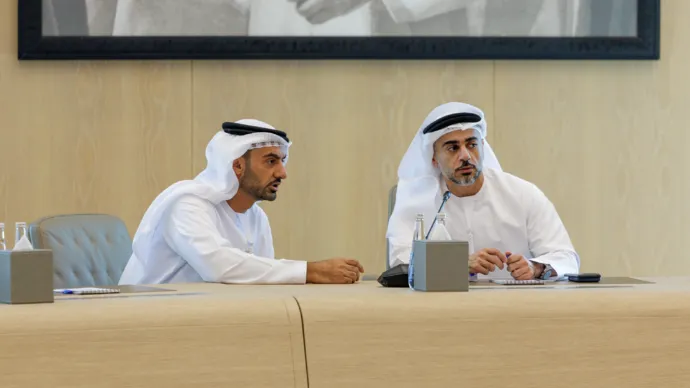
The Abu Dhabi Chamber of Commerce and Industry has hosted the Multaqa Al Tujjar: Private Sector Leaders & Decision Makers Forum at the Abu Dhabi Energy Centre, with broad participation from senior government representatives and leading figures from the private sector and business community aimed at strengthening coordination, addressing market priorities, and advancing a shared economic agenda.
The forum follows high-level meetings held during past weeks, bringing together government bodies and business leaders, to address market stability and supply chain challenges amid evolving global economic conditions.
It reflects Abu Dhabi’s continued focus on institutional alignment and execution and serves as a structured platform to connect decision-makers with the business community, translate policy into action, and address operational challenges in real time. Discussions focused on practical measures to support business continuity, enhance supply chain resilience, and reinforce the emirate’s ability to navigate global shifts with clarity and confidence.
The sessions also highlighted ongoing efforts to strengthen the business environment through targeted programmes and regulatory enablement. This comes against the backdrop of sustained national growth, with non-oil sectors continuing to expand and underpin the UAE’s economic diversification, reflecting the strength of a model built on stability, competitiveness and long-term planning.
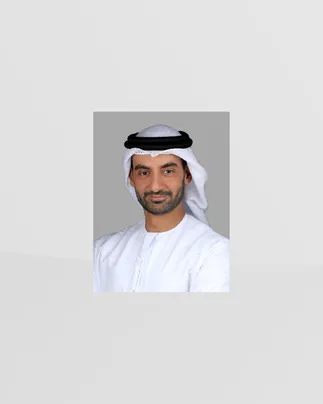
His Excellency Ahmed Jasim Al Zaabi, Chairman of the Abu Dhabi Chamber of Commerce and Industry, said: "Abu Dhabi’s economic model is designed to perform through change. It is anchored in institutional alignment, regulatory clarity, and a deliberate partnership between government and the private sector."
His Excellency added: "The roundtables provided direct insight into current market conditions, allowing us to respond with precision and align policy with real operating needs. In periods of uncertainty, the priority is ensuring the uninterrupted flow of trade, maintaining supply chain resilience, and providing businesses with the confidence to operate and plan ahead. Our focus now is execution, translating insight into action, accelerating delivery, and ensuring the private sector remains central to sustaining momentum and stability.”
The sessions witnessed high-level participation from government and private sector entities, including the Abu Dhabi Department of Economic Development (ADDED), Abu Dhabi Ports Group, Abu Dhabi Customs, the Abu Dhabi Investment Office (ADIO), the Integrated Transport Centre (Abu Dhabi Mobility), 7x, the Export Credit Insurance Company of the Emirates (ECI), Dell, and Presight AI among others.
The forum showcased key outcomes from these sessions, most notably the ADEED platform, an advanced digital system that provides companies with real-time supply chain data, enabling proactive decision-making and reinforcing the UAE's position as a resilient global logistics hub. The live demonstration of the platform highlighted the role of technology-driven solutions in supporting business continuity and developing the trade infrastructure of Abu Dhabi.
The forum commenced with two closed roundtable sessions - the first dedicated to the tourism sector and the second to the industrial sector - bringing together government representatives and business leaders to discuss key challenges and opportunities, as well as ways to enhance supply chain efficiency and support business continuity. The sessions spotlighted key themes reflecting the priorities of the private sector in Abu Dhabi, focusing on policies and initiatives supporting business, and enhancing growth opportunities in trade, logistics, and industrial sectors, contributing to greater competitiveness and supporting the transition towards a knowledge-based economy.
The first panel, titled ‘Delivering for Business: Live Policy & Initiative Announcements’, addressed a series of proactive measures taken by government entities to ensure business continuity and strengthen supply chain resilience.
During the session, participants showcased Abu Dhabi's readiness to address challenges through the activation of contingency plans and the integration of roles across various entities. The discussion highlighted efforts to enhance the efficiency of logistics operations, including increasing port capacity, accelerating handling rates, expanding the scope of operational services, and maintaining the smooth flow of goods while reducing pressure on infrastructure, all in support of market stability.
The panel also discussed initiatives supporting the private sector, which included simplifying customs procedures, providing fast-track clearance pathways, activating digital solutions to facilitate access to government services, and strengthening partnerships with the private sector through direct engagement sessions and roundtables.
The second panel, titled ‘Open for Growth: Abu Dhabi's Trade, Logistics & Industrial Opportunity’, featured Mohammad Jaber, CEO of Combi Lift Projects MEA, and Tariq Al Wahedi, Group CEO of 7x, who discussed Abu Dhabi's key competitive advantages in trade and supply chains, its role as a regional trade hub, and the opportunities available for business expansion and cross-sector economic integration. Participants affirmed that advanced infrastructure, combined with regulatory flexibility, has contributed to enhancing supply chain efficiency and creating an attractive investment environment.
They added that the UAE possesses an advanced and diversified logistics network, providing access to numerous global markets, emphasising the importance of developing digital platforms to enhance logistics efficiency. They also pointed to the role of modern technologies in improving shipment tracking and real-time operations monitoring, supporting more accurate and agile decision-making.
During the third panel, titled ‘Powering the Future: AI, Technology & Government Innovation’, Hani Khalaf, Chief Technology Officer at Dell, and Magzhan Kenesbai, Chief Growth Officer at Presight, discussed the pivotal role of advanced technologies and artificial intelligence in reshaping and empowering the business environment amid rapid change.