
In collaboration with the National Academy for Childhood Development, the Abu Dhabi Department of Community Development (DCD) has announced it has now trained more than 1,000 coaches, administrators, volunteers and sports sector professionals through Levels 1 and 2 of the Child Protection in Sports programme.
This joint initiative, which covers both basic and advanced child protection training, supports the wider efforts and implementation of the Child Protection in Sport Policy, a policy launched by the DCD in June 2025, to help ensure a safe and inclusive sporting environment for children across Abu Dhabi.
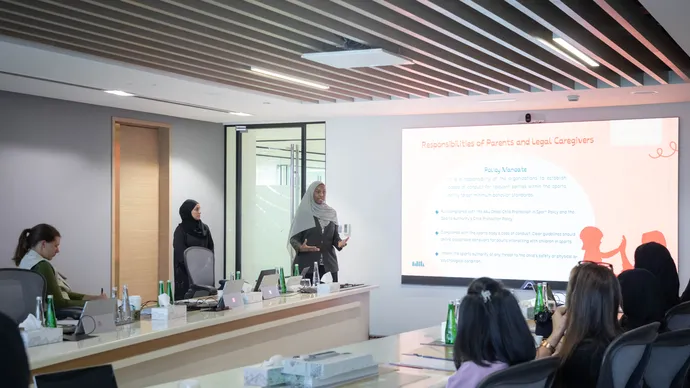
The announcement cameduring the closing event of the Level 2 - Child Protection in Sports programme, hosted by DCD, and attended by 60 participants.
Through a series of workshops, participants were introduced to four key principles that help foster a safe and trusted environment for children and their families: promoting children’s right to participation, adopting a zero-tolerance approach to all forms of child abuse, reinforcing accountability and responsibility, and ensuring protection from harm and retaliation.
Developed in line with the requirements of the Child Protection in Sport Policy, the workshop and wider programme cover topics such as the different forms of abuse that children may face. Through real-life examples and practical scenarios, participants were able to gain a deeper understanding of how to identify concerns and respond to safeguarding children, in accordance with the approved procedures and guidelines; all of which is part of a plan to help create a safer and more supportive sporting environment for children.
The programme also highlighted the role of child protection coordinators within sports organisations, outlining their responsibilities and the measures required to ensure the effective implementation of the policy.
His Excellency Mohamed Helal Al Balooshi, Executive Director of the Community Engagement and Empowerment Sector at DCD, said: “Training more than 1,000 sports professionals within such a short period is a significant achievement. It also reflects the strong commitment of sports organisations and DCD’s strategic partners in upholding the highest standards of child protection across the sports sector.
“Entrusted with the protection of children and their rights, at DCD we believe that creating a safe environment for children is a shared responsibility that requires ongoing capacity building, greater awareness and close collaboration among all stakeholders. Only by working together can we ensure that children are able to participate in sports with confidence and security, while contributing to a better quality of life across Abu Dhabi.”
Her Excellency Dr Meera Al Kaabi, Acting President of the National Academy for Childhood Development, said: “Our partnership with the Abu Dhabi Department of Community Development marks an important step towards strengthening an integrated approach to child protection across Abu Dhabi. By enhancing the readiness of professionals working with children and promoting consistent practices, we are helping create safe and supportive environments that foster children’s growth and wellbeing, including within the sports sector.
“The Child Protection in Sports programme equips professionals with the knowledge and skills to identify potential risks and respond appropriately through a clear framework based on recognised best practices, helping embed a culture of prevention that places children’s safety and wellbeing at the heart of every organisation. Investing in professional development and building specialised expertise is essential to strengthening the confidence of families and the wider community, while supporting Abu Dhabi’s vision of providing safe and supportive environments where children can thrive.”
The Child Protection in Sport Policy’s regulatory framework requires all sports organisations to implement a series of mandatory criteria. They include providing services to children to adopt an internal child protection policy, the appointment of a Child Protection Coordinator, and ensuring that staff working directly with children receive the appropriate training. Organisations are also required to establish clear procedures for reporting and addressing any concerns related to child safety, in line with approved safeguarding standards.
Introduced a year ago this month, the policy is a first-of-its kind in Abu Dhabi, and it has already succeeded in establishing a comprehensive framework to safeguard children participating in sports activities by setting mandatory standards and procedures for all sports organisations. This includes sports clubs, academies, sports centres, and seasonal programmes.
The policy is in direct alignment with the UAE’s Wadeema’s Law or Federal Law No. 3 of 2016 on Child Rights, as well as relevant legislation and regulations, helping ensure a safe sporting environment that protects the wellbeing and safety of children taking part in sports activities. The policy also represents the first comprehensive and legally binding child protection framework developed specifically for the sports sector in Abu Dhabi.
This translates into actionable results by requiring all individuals working with children within sports organisations to complete the approved training and certifications set out in the implementation guide.
With these requirements in place, the sports sector’s readiness to apply the highest standards of child protection is strengthened and, as a consequence, supports greater participation in physical activity among children in Abu Dhabi by ensuring access to safe, inclusive and accessible sporting opportunities. It also contributes to enhancing the overall sporting experience and confidence of families and the wider community in the sports sector.
The Department also encourages all professionals working with children across the sports sector who have not yet completed the course to register for Level 1 of the “Child Protection in Sport” Programme. The course is available in Arabic and English until 15 December 2026 through the National Academy for Childhood Development: training.nacd.ac.ae.
To date, the policy now applies to more than 3,000 sports facilities and entities across Abu Dhabi and sets out mandatory requirements covering recruitment, screening, training, the provision of safe environments, incident response and case management. Together, these measures establish a comprehensive institutional approach to safeguarding children across sports facilities and activities.