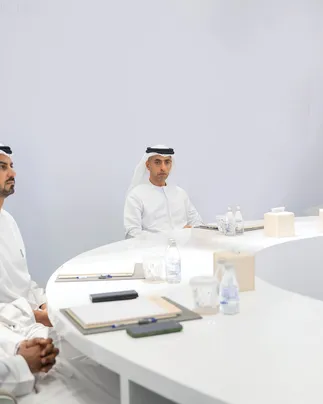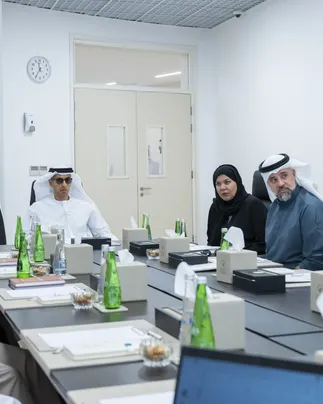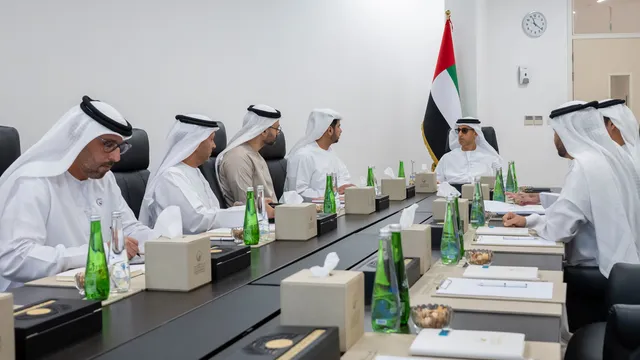

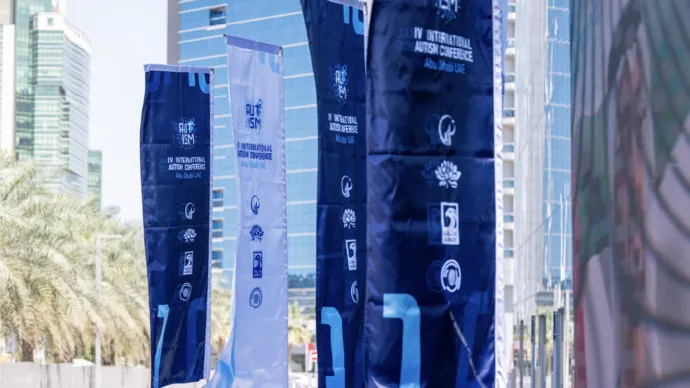
The 4th International Autism Conference 2026, held under the patronage of His Highness Sheikh Khalid bin Zayed Al Nahyan, Chairman of the Board of Trustees of Zayed Authority for People of Determination, has concluded, reaffirming its global leadership in empowering People of Determination. The emirate continues to move beyond hosting knowledge to lead transformative changes toward creating sustainable impact, enhancing quality of life, and reinforcing the principles of inclusion and independence for individuals with autism spectrum disorder.
The conference organisers extended their deepest gratitude and appreciation to His Highness for his generous patronage, his presence at the opening session, and his continuous support, which serves as a fundamental pillar in advancing comprehensive empowerment and strengthening Abu Dhabi’s global standing in this vital field.
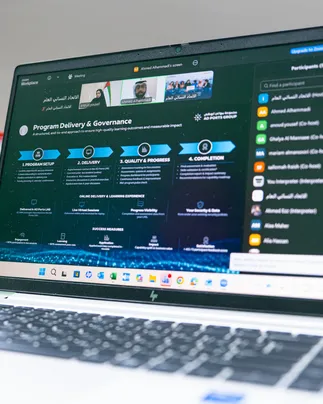
The conference, held over four days from 25-28 April 2026 at the Abu Dhabi Energy Center, witnessed wide international participation, with around 6,000 attendees both in person and virtually, and 152 speakers, including 86 international experts. This reflects growing global confidence in Abu Dhabi’s role as a hub for generating specialised knowledge in autism and translating it into impactful applications.
In his closing remarks, His Excellency Abdullah Abdul Aali Al Humaidan, Secretary-General of the Zayed Authority for People of Determination, emphasised that the conference represented a significant milestone in advancing an integrated ecosystem to support and empower individuals with autism spectrum disorder. He noted that the rich scientific discussions and exchange of expertise reflect a genuine shift toward translating knowledge into practical applications that create tangible and sustainable impact in the lives of individuals and their families.
His Excellency added that true awareness begins within the community and is reflected through impactful initiatives that promote a culture of acceptance and positive engagement, supporting the inclusion of individuals with autism and enabling their active participation across all aspects of life.
His Excellency announced the launch of a global awareness campaign titled ‘Smile… Your Smile is Enough to Make Them Happy’, under the patronage of Sheikha Moza bint Suhail. This initiative reflects Abu Dhabi’s vision of transforming awareness into societal behavior and building a global movement that fosters understanding and inclusion.
His Excellency also announced a new strategic direction to evolve the conference into a comprehensive global platform under the name Global Autism Platform, aimed at unifying international efforts, bridging research with practice, and fostering impactful partnerships that deliver sustainable outcomes. Additionally, the next edition of the conference was announced to take place from 24 to 30 April 2027.
The conference concluded with participants presenting set of strategic recommendations reflecting an integrated vision for advancing autism services. These recommendations are built on innovation, institutional integration, and sustainability, contributing to improved quality of life and enhanced community inclusion for individuals with autism.
The recommendations highlighted the importance of leveraging artificial intelligence and innovation to build a multi-sector, data-driven ecosystem that supports decision-making and provides advanced tools for early intervention. They also stressed the need to establish strong governance and ethical frameworks, ensure data privacy, and position AI as a supportive partner for families, alongside adopting personalised learning platforms and smart communication tools.
In the education sector, the recommendations emphasised the need to transform the educational system to enhance inclusion by evaluating schools based on inclusion indicators, implementing community-based service models, providing mandatory training for educators, offering specialised support within mainstream schools, and developing vocational and alternative pathways aligned with labour market needs.
In the health sector, the recommendations called for strengthening AI-supported early detection and integrating it into primary healthcare to accelerate diagnosis and ensure timely intervention. They also highlighted the importance of developing a comprehensive autism center model across all life stages, delivering multidisciplinary care with active family involvement. Furthermore, the need to establish a unified national data platform and adopt AI governance frameworks was emphasised to promote responsible innovation and equitable access to services.
With emphasis on the workplace, the recommendations called for adopting flexible work models that consider neurodiversity, focusing on the quality of participation and job stability. They also emphasised transitioning toward task and project-based work models, designing roles aligned with individuals’ abilities, and evaluating AI applications to ensure they are free from bias.
The recommendations also underscored the importance of strengthening community inclusion by expanding early detection and intervention programmes, advancing inclusive education, and broadening rehabilitation services. They highlighted the need for awareness initiatives, the establishment of family support platforms, and stronger public-private partnerships to provide inclusive training and employment opportunities.
They further emphasised the critical role of families as key partners in the rehabilitation process through active involvement in planning, access to training and guidance, and the provision of sustained psychological and social support.
The recommendations concluded with a call to translate the conference outcomes into clear implementation plans based on three key priorities: early detection, comprehensive life-cycle centers, and an integrated data and AI ecosystem, urging stakeholders to collaborate in implementing these recommendations within a defined timeframe to achieve tangible and sustainable impact.
The conference addressed advanced strategic themes, including the use of artificial intelligence in diagnosis and rehabilitation, the development of inclusive education models, enhancing the readiness of inclusive work environments, supporting physical and mental health, and empowering families as key partners in the rehabilitation journey, within a comprehensive human-centered vision.
It also served as a global platform to showcase best practices and international experiences, and to explore innovative solutions that respond to the needs of individuals and their families, reflecting a commitment to building a sustainable ecosystem based on innovation and cross-sector integration.
The organising committee extended their thanks and appreciation to partners and supporters, including the Zayed Authority for People of Determination, Lotus Holistic Group, ADNOC, Skills4Mind platform, Sakinah, and NMC Group, as well as strategic partners: the Department of Community Development – Abu Dhabi, the Department of Health – Abu Dhabi, the Abu Dhabi Public Health Center, and the Department of Culture and Tourism – Abu Dhabi, recognising their roles in the success of this global event.
Appreciations were also extended to experts, specialists, participants, families of People of Determination, and work teams, whose efforts contributed to this achievement. It was emphasised that what has been accomplished marks the beginning of a new phase of continuous collaboration, with initiatives emerging from Abu Dhabi to the world.
The conference aligns with the UAE’s vision to promote comprehensive empowerment, enhance quality of life, and build a more inclusive and sustainable society, in line with the principles of the UAE Year of Family 2026, reaffirming that empowering People of Determination remains a national priority and a fundamental pillar of the country’s development journey.