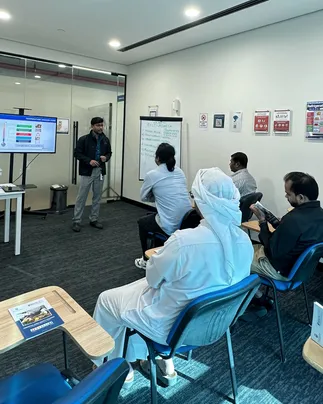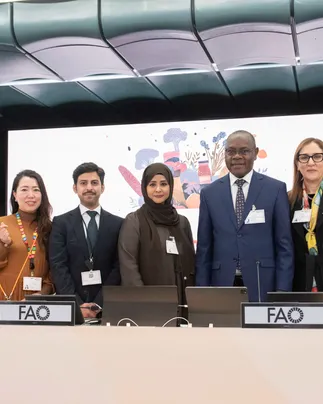

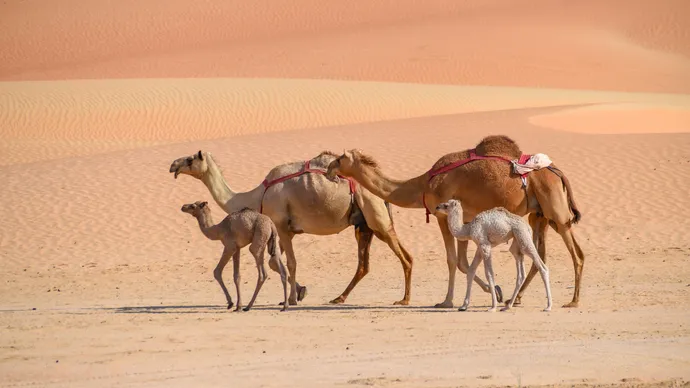
The Abu Dhabi Agriculture and Food Safety Authority (ADAFSA) has hosted the regional workshop on Facilitating the Movement of Camels Across Borders in the gulf region. Organised jointly by the Camel Middle East Network (CAMENET), the UAE Camel Racing Federation, and the World Organisation for Animal Health (WOAH), the event formed part of collective efforts to enhance procedures governing the temporary movement of camels between countries for participation in competitions and festivals, while ensuring high standards of animal health, biosecurity and welfare.
The workshop brought together representatives from the Ministry of Climate Change and Environment (MOCCAE), the Abu Dhabi Agriculture and Food Safety Authority (ADAFSA), members of the Camel Middle East Network (CAMENET) Steering Committee, delegates from the Food and Agriculture Organization (FAO) and Representatives from World Organization of Animal Health (WOAH), alongside national and international camel racing federations and clubs from across the gulf region.
Several innovative initiatives were presented during the workshop. Among them was the Smart Gateway proposal introduced by M42 Environmental Sciences, which involves developing a digital platform and tracking system to streamline camel movements, reduce time and resource consumption, and provide an accurate, sustainable data-sharing framework. The Green Route initiative, proposed by MOCCAE, which aims to establish a dedicated route for camels participating in events, expediting procedures and optimising resource use in coordination with relevant authorities. In addition, WOAH proposed the introduction of unified regional health certificates to accelerate camel movement while maintaining strict health controls under a harmonised framework.
These initiatives received wide commendation from participants, who underscored the importance of their implementation to facilitate camel participation in regional events and enhance health safeguards.
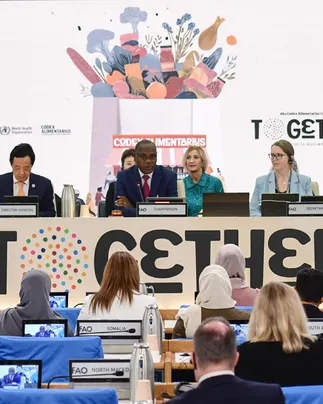
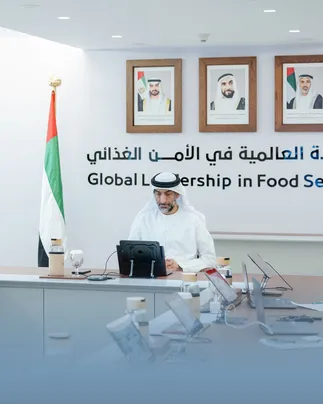
Running alongside the workshop, the 8th Technical and Steering Committee Meeting of the Camel Middle East Network (CAMENET), was held as part of the Global Food Week 2025. The meeting reviewed the network’s Five-Year Work Plan (2026–2030), built around five key pillars: animal welfare, camel diseases and diagnostics, risk assessment, research and studies, and the One Health approach.
CAMENET member countries delivered detailed presentations on the status of their camel sectors, including herd demographics, key challenges facing this industry, and opportunities to strengthen regional cooperation in veterinary health, knowledge exchange, and capacity development.
At the conclusion of the meeting, participants reaffirmed CAMENET’s central role in developing the camel sector across the Middle East region, bridging knowledge gaps in camel health and husbandry, and reinforcing biosecurity systems across the region.
Asma Abdi Mohamed, Director of Biosecurity Affairs at ADAFSA, said: “Abu Dhabi’s hosting of these specialised regional meetings underscores its leadership as a regional centre of excellence in animal health and biosecurity. It reflects our commitment in supporting scientific initiatives and expert networks that enhance the sustainability of the animal wealth sector - particularly camels, which represent a cornerstone of the region’s cultural and economic heritage.
“We take pride in Abu Dhabi serving as a platform for scientific dialogue and regional coordination. ADAFSA remains dedicated to transforming the outcomes of these meetings into actionable programmes that strengthen veterinary and health systems across member countries.”
Asma Abdi Mohamed further highlighted ADAFSA’s commitment to strengthening regional and international cooperation in animal health, adopting best global practices and advanced technologies to enhance biosecurity frameworks, particularly in relation to camels - a key component of livestock production in the region. She noted that such regional gatherings represent a strategic opportunity to exchange expertise, address shared challenges, and develop innovative, sustainable solutions to support the sector’s growth and improve readiness against transboundary animal health risks.
The Camel Middle East Network (CAMENET) comprises nine member countries from across the Middle East. Officially launched during the WOAH Regional Commission Meeting in Paris in 2016, the network aims to advance knowledge exchange on camel diseases, harmonise diagnostic methodologies, and promote scientific and technical collaboration among member countries and international organisations.