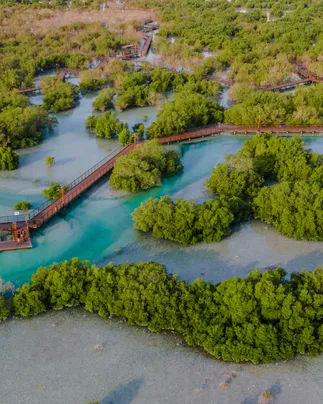

The Environment Agency – Abu Dhabi (EAD), in collaboration with the International Union for Conservation of Nature (IUCN) Mangrove Specialist Group, has launched the Mangrove Ecosystem Monitoring Toolkit for the Arabian Gulf Region, marking another regional first in advancing the science and practice of mangrove conservation.
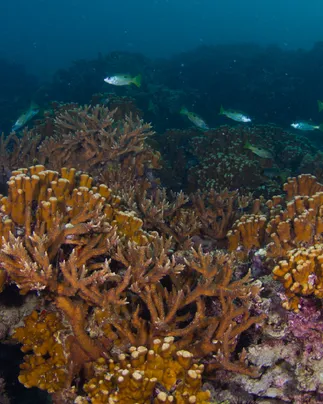
The toolkit, the first-of-its kind, tailored specifically to the environments of the Gulf Cooperation Council (GCC) was developed under the framework of the Abu Dhabi Mangrove Initiative (ADMI) and its partners, including ADNOC, the British Embassy in the UAE, and ZSL. It provides practical, scientifically validated methods to monitor mangroves and their associated biodiversity. It combines both advanced approaches, such as environmental DNA (eDNA), with simple, accessible methods that can be used by practitioners, government entities, NGOs and even citizen scientists.
By standardising methodologies and offering clear guidance, it enables more accurate assessments of ecosystem health, empowering decision-makers and conservationists with the knowledge they need to plan, adapt and scale mangrove efforts effectively.
Developed by leading global mangrove experts, the GCC Mangrove Toolkit is the result of a unique collaboration that brought together EAD, members of the IUCN Mangrove Specialist Group and renowned scientists, including Professor Norman Duke, a world authority on mangroves, as well as Dr. Stefano Cannicci and Dr. Sara Fratini from the University of Florence.
Maitha Mohamed Al Hameli, Director of Marine Biodiversity Division at EAD, said: “This toolkit is a game-changer for our region. For too long, success was measured by the number of mangrove seedlings planted. Now, we have a science-based, practical guide that ensures those seedlings and ecosystems are effectively monitored, protected and restored. By equipping practitioners and communities with validated tools, from advanced eDNA to simple citizen science methods, we are turning evidence into action.”
Prof Shing Yip (Joe) LEE, Chair of the IUCN Mangrove Specialist Group, said: “Knowledge transfer sits at the heart of the Mangrove Specialist Group’s work, and we are pleased to have contributed to the development of these tools, which represent a meaningful addition to efforts to conserve and manage mangroves and their associated habitats. Despite their significant ecological value, mangroves remain among the least studied ecosystems globally. This initiative helps address a critical knowledge gap by strengthening regional understanding and engaging both specialist scientists and citizen scientists in research and monitoring.”
The launch of the GCC Mangrove Toolkit sets a new standard for mangrove monitoring in arid and semi-arid regions. It will support governments and conservation professionals and engage communities in safeguarding one of the most critical ecosystems for biodiversity, coastal protection and climate resilience.